Skip to content

Septic pumping across Gwinnett County · Office Mon–Fri 7am–6pm · Emergency line 24/7

Alcovy Septic SEPTIC TANK PUMPING

Grease Trap Pumping in Lawrenceville, GA

Restaurants, cafeterias, church kitchens and bakeries across Gwinnett need the whole interceptor emptied, not the top skimmed. You get a full pump-out, the trap measured against the 25 percent rule, and a dated manifest for your file.

Price range given before dispatch · Answered 24/7

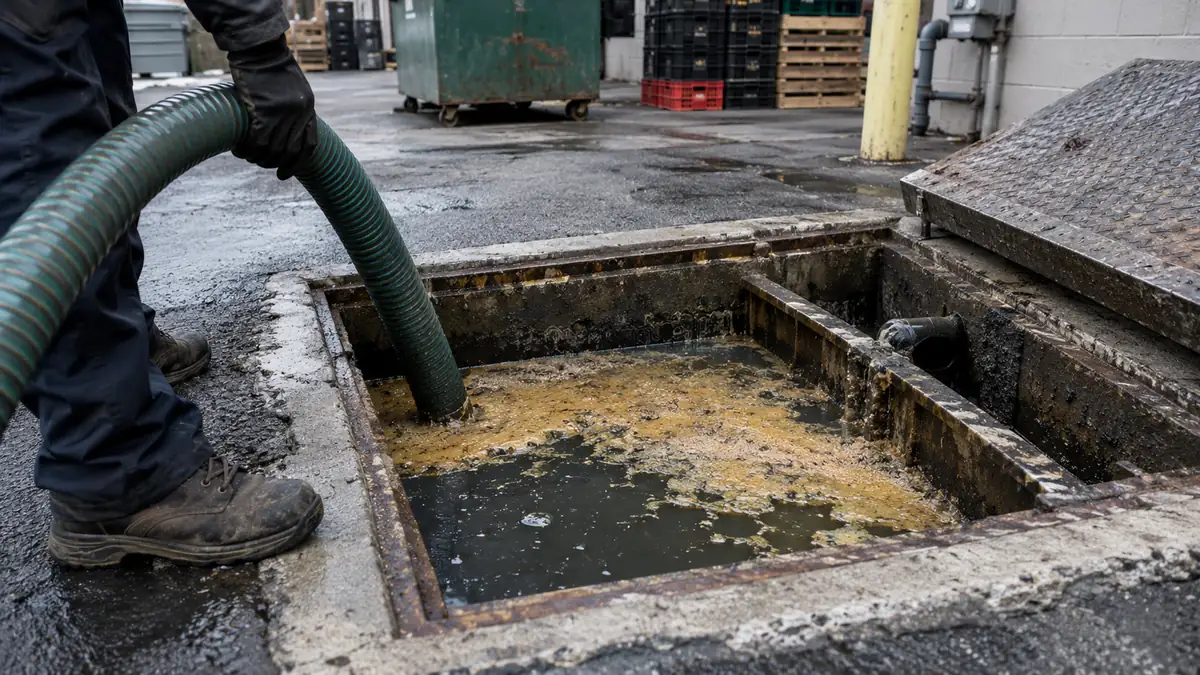
Open exterior grease interceptor being pumped in the service yard behind a Georgia restaurant

Signs you need this

When to call for grease trap pumping

Grease layer past a quarter depth

Measure from the outlet water level to the bottom of the trap. When grease and settled solids reach 25 percent of that depth, the trap is due regardless of the calendar.

Kitchen drains backing up

A three-compartment sink or floor drain that gurgles or holds water usually means the trap is full and the outlet is submerged in grease.

Odor at the back door

A full outdoor interceptor vents rancid grease odor around the lid and the cleanouts. Customers smell it before you do.

Last manifest is missing

If you cannot produce dated manifests for the past cleanings, an inspection becomes a paperwork problem on top of a plumbing one.

Last updated:

Alcovy Septic handles grease trap pumping in Lawrenceville, GA and across Gwinnett for restaurants, cafeterias, bakeries, church kitchens and daycare kitchens. The trap gets emptied completely — liquid, floating grease and settled solids — measured against the 25 percent rule, and documented on a dated manifest you can hand to an inspector.

What the county expects

Gwinnett County set up a fats, oil and grease prevention program in 2000, run under a county FOG ordinance and backed by the federal Clean Water Act and the Georgia Water Quality Control Act. The county’s own description is direct: the ordinance “outlines steps restaurants and food service establishments must take to keep FOG out of the County’s system,” and county inspectors check that businesses are following it (Gwinnett County).

What the county’s public FOG page does not publish is a service frequency. So the working standard for scheduling comes from two places, and it is worth being clear about which is which:

  • The 25 percent rule — a condition standard used across metro FOG programs. It says a trap is due when accumulated grease and solids reach a quarter of the trap’s operating depth, no matter what the calendar says.
  • The City of Atlanta ordinance — the nearest published frequency floor in this metro. It is not Gwinnett law, but it is the number most operators and haulers work to because it is written down.

The 25 percent rule, measured properly

The rule has a real definition, not a guess. Under City of Atlanta Code § 154-297.03, the depth of oil and grease — floating and settled together — must not equal or exceed 25 percent of the total operating depth of the trap. Operating depth is measured from the outlet water elevation down to the bottom of the trap. The same section notes that floating grease alone should stay under 20 percent, because roughly five percent of the grease settles to the bottom.

That is why the crew measures before pumping and writes the number down. A trap reading 30 percent on a 90-day schedule needs a 60-day schedule; one reading 8 percent may be over-serviced.

Frequency: where the 90-day and 14-day numbers come from

The City of Atlanta ordinance requires outdoor grease traps to be maintained “not less than once every 90 days,” and indoor traps “at intervals no less than once every 14 days,” on top of the 25 percent rule (§ 154-297.03). Facilities operating only for occasional special events can be permitted on an event-based schedule.

Those are City of Atlanta numbers. Gwinnett has its own ordinance and its own inspectors, and its published page does not state a frequency — so treat 90 days outdoor and 14 days indoor as the defensible benchmark rather than a Gwinnett citation. If your kitchen is high-volume fry or heavy on a dishmachine, expect to be tighter than the floor. Our grease trap frequency guide goes deeper into how to defend your schedule.

Full pump-out, not skimming

A skim job removes the floating layer and leaves the sludge on the bottom, so the trap holds less every cycle and the invoice looks cheap until the line blocks.

The Atlanta ordinance is unusually explicit on this point: maintenance “shall include the complete removal of all contents, including floatable materials, wastewater, sludges, and solids,” and “top skimming of outdoor grease traps, decanting or back flushing of the grease trap or its wastes for the purpose of reducing the volume to be hauled is prohibited.” It also prohibits maintaining a trap by adding bacteria, enzymes or chemicals. That is the method standard we work to whether your building sits inside a city or in unincorporated Gwinnett.

If the trap is clean and the drains are still slow, the problem has moved into the pipe. That is a line jetting job, not another pump-out — the pumping vs cleaning vs jetting guide explains where the line falls.

Traps on septic vs traps on sewer

Two different risk pictures, same service:

On sewer. The trap protects the county collection system. Failure shows up as a sanitary sewer overflow and a compliance letter.

On septic. The trap protects your own drain field, the more expensive thing to lose. Grease past an interceptor floats on the tank’s scum layer, carries out the outlet and blinds the trench soil, and there is no rodding that back out — you buy a new field. Buildings on septic should run commercial septic pumping alongside trap service, with the effluent filter cleaned each visit and drain field repair only if it is already too late.

Records and manifests

Each visit should leave a manifest with the establishment name and address, the trap type and size, the date of service, the hauler, the total gallons removed and the disposal site. Atlanta’s ordinance requires those records be kept on site for three years and produced on request. DeKalb County’s FOG program points establishments to the Georgia EPD commercial waste manifest form for the same purpose.

Keep them in one binder near the kitchen office. The same file answers an inspector, a franchisor audit and a buyer’s questions if you ever sell the business.

What grease trap service costs

Homeyou’s September 2026 Atlanta-area data puts grease trap service at a typical range of $96 to $696. The spread is real: a 40-gallon under-sink unit and a 1,500-gallon outdoor interceptor are the same job description and very different work. Size, access, how overdue the trap is and whether the crew can get a truck within hose reach are what move the number.

You get a price range on the phone before anyone is scheduled, and work outside operating hours normally carries a 50 to 100 percent premium. Kitchens in Snellville, Lilburn, Grayson and Loganville are on the same routes as our septic work, so trap service and a tank pump-out can be scheduled on one visit. Send us the details and we will size the interval to your kitchen.

What's included

  • Grease and solids depth measured before pumping
  • Complete removal of liquid, sludge and floating grease
  • Sidewalls and baffles scraped and inspected
  • Inlet and outlet tees checked for damage
  • Trap refilled with clean water where required
  • Lid gaskets and access covers reseated
  • Gallons removed and disposal site recorded
  • Dated manifest left for your on-site file

Upfront pricing

What grease trap pumping costs

Published ranges for the Lawrenceville area, so you know what's fair before you call anyone.

What changes the price

  • Tank size and how full it is
  • How deep the lid is buried
  • After-hours, weekend or holiday timing
  • Access for the truck hose (typically 100–150 ft)
Estimate your price in 30 seconds
  • Grease trap service, Atlanta metro

    Typical observed range; size and access drive the number (Homeyou, Sep 2026)

    $96–$696

  • After-hours or overnight service

    Added to the standard rate for work outside operating hours

    50–100% premium

Ranges are typical market prices drawn from the sources listed on this page, not a quote. Your price is confirmed before work starts.

Compare

What your options actually get you

How grease traps get serviced in practice. Costs are market ranges, not quotes.
Factor Enzymes and hot waterTop skimming onlyFull pump-out and manifest
What leaves the trap Nothing — grease moves downstreamThe floating layer onlyAll liquid, grease and settled solids
Effect on the line Grease re-congeals in the sewer or drain fieldSolids keep building on the bottomLine and trap both left clear
Allowed under FOG rules Chemical and enzyme dosing is prohibited in Atlanta's ordinanceTop skimming is prohibited in Atlanta's ordinanceComplete removal is what the ordinance requires
Paperwork produced NoneOften a vague invoiceManifest with gallons and disposal site
Inspection outcome Fails on the 25 percent ruleFails once solids are measuredDocumented compliance

How grease traps get serviced in practice. Costs are market ranges, not quotes.

Guides

Read before you book

The process

How grease trap pumping works, step by step

  1. Measure before pumping

    The crew measures the operating depth and the combined grease and solids layer so there is a number on the record, not an opinion, showing why the trap needed service.

  2. Full evacuation

    Everything comes out — floating grease, wastewater and settled solids. No top skimming, no decanting liquid back into the trap to cut hauling volume.

  3. Clean and inspect

    Walls and baffles are scraped, the inlet and outlet tees are checked, and anything cracked or missing gets written down before the lid goes back on.

  4. Manifest and next date

    You get a dated manifest with gallons removed and the disposal site, plus a recommended next service date based on what the measurement showed.

Book the trap before the health inspector does.

Alcovy Septic pumps the whole interceptor, measures it against the 25 percent rule and leaves you a dated manifest for the file.

FAQ

Grease Trap Pumping questions

How often does a grease trap have to be pumped in Gwinnett County?

Gwinnett runs a FOG program under county ordinance but its public page does not publish a fixed interval, so most kitchens are scheduled against the widely used 25 percent rule. The nearest published benchmark is the City of Atlanta's ordinance, which requires outdoor traps to be cleaned at least every 90 days and indoor traps at least every 14 days.

What is the 25 percent rule?

Measure the internal depth from the outlet water level to the bottom of the trap — that is the operating depth. When the combined floating grease and settled solids reach 25 percent of it, the trap must be cleaned. Atlanta's ordinance adds that floating grease alone should not exceed 20 percent, since roughly five percent settles.

Can the trap just be skimmed to save money?

Skimming removes the floating layer and leaves the settled solids, so the trap loses capacity every cycle and you pay to learn that later. The City of Atlanta ordinance prohibits top skimming, decanting and back-flushing of outdoor traps for the purpose of reducing hauled volume, and full removal is the standard we work to.

Do enzymes or bacteria replace pumping?

No. Additives emulsify grease so it moves past the trap and re-congeals further down the line or in a drain field. Atlanta's ordinance specifically prohibits maintaining a grease trap by bacteriological, chemical or enzymatic treatment. The grease has to physically leave the building in a truck.

What paperwork should I keep after a grease trap cleaning?

A manifest naming the establishment, the trap type and size, the date of service, the hauler, the total gallons removed and the disposal site. Atlanta's ordinance requires those records be kept on site for three years, and Georgia haulers commonly document them on the state EPD commercial waste manifest form.

Do you give a price before you start?

Yes. You hear a price range on the phone, and the crew confirms the final price once the lid is uncovered and they can see the tank. If anything changes the price, such as a deeper dig or a lid under concrete, they stop and ask before continuing.

Keep going

Related services

  • Commercial Septic Pumping

    Scheduled pumping for churches, offices, farms and shops on septic, with service records kept for your files.

    Set up service
  • Septic Line Jetting

    High-pressure jetting clears roots, grease and sludge from the lines between house, tank and distribution box.

    Clear my lines
  • Septic Tank Repair

    Broken baffles, cracked lids, clogged outlet filters and failed inlet pipes repaired and documented.

    Fix my tank

Next step

Everything out, measured, documented, and scheduled around your kitchen.

Prefer not to call? Send two quick details and a dispatcher will call back within 15 minutes.

Get a free septic pumping quote

Two quick steps. A local dispatcher will call back within 15 minutes.

Step 1 of 2
Step 2 of 2

Faster: call (470) 299-0510. We never share your details.

Call (470) 299-0510 · 24/7