Lilburn, GA Septic Tank Pumping — Homes and Businesses
Lilburn grew up in the 1960s, '70s and '80s, which means its concrete tanks are among the oldest still in service in Gwinnett County. Residential pump-outs off Killian Hill and Camp Creek, plus commercial work along Lawrenceville Highway and Beaver Ruin.
- ZIP 30047 · 30048
- Gwinnett County
- About 10 miles southwest of downtown Lawrenceville via US-29 (Lawrenceville Highway)
Septic in Lilburn
What we see on Lilburn septic calls
The oldest concrete in the county
Tanks poured in the 1960s and 1970s are still in the ground here. Cast baffles crumble, lids thin out, and the inlet tee often sits in pieces on the tank floor by the time anyone looks.
Strip retail and churches on septic
Plenty of small offices, salons, churches and food businesses along US-29 and Beaver Ruin run on tanks and grease traps rather than sewer, on schedules the county expects you to document.
Yellow River and Camp Creek bottoms
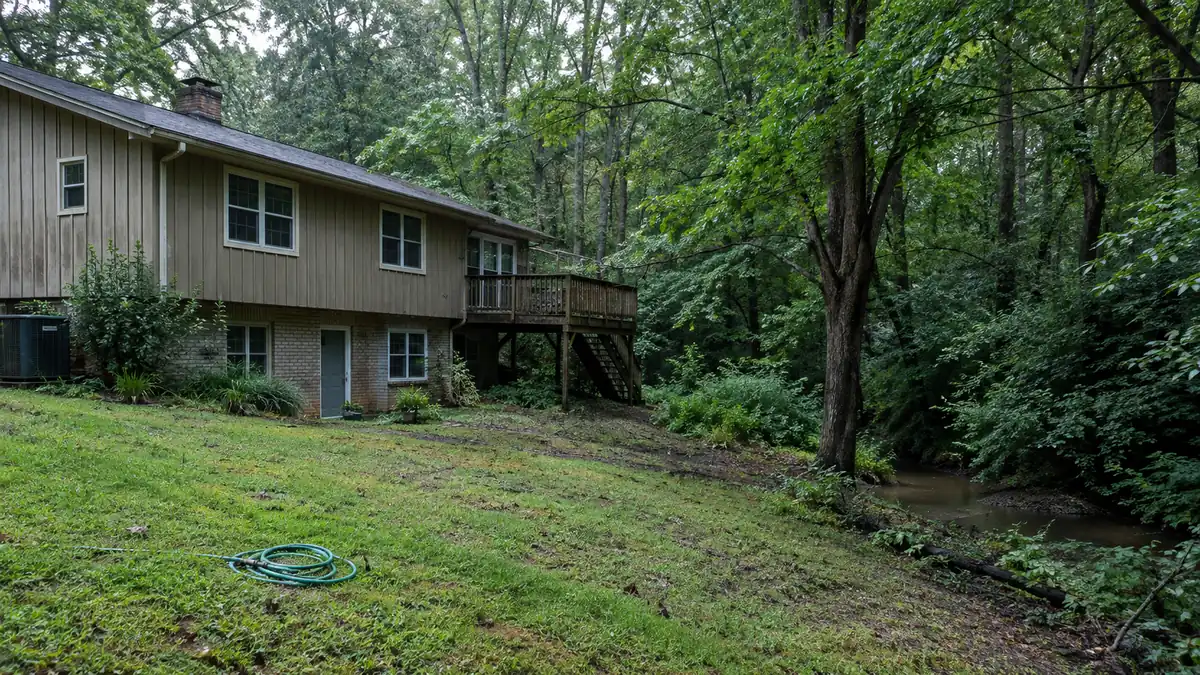
Lots that fall toward Camp Creek or the Yellow River sit in a narrow floodplain. Fields down there stay wet long after the rain stops and push effluent back toward the tank.
A credit most Lilburn residents miss
Gwinnett extends its septic workshop stormwater credit to city of Lilburn addresses, not just unincorporated ones. The pumping credit needs a hauler's receipt, which many homeowners never file.
Local knowledge
Septic in Lilburn: what's different here
Alcovy Septic does septic tank pumping in Lilburn, GA for houses off Killian Hill and Camp Creek Road, for the older streets around Old Town, and for the commercial lots strung along Lawrenceville Highway. Gwinnett County estimates about 30% of its residents are on septic — one of the highest concentrations in the United States — and Lilburn holds some of the oldest tanks in that count.
Why Lilburn tanks are a different job
Age is the whole story here. Lilburn was already a town when the rest of Gwinnett was pasture, and much of its housing went up between the early 1960s and the mid-1980s. A tank installed in 1968 has spent close to sixty years in wet red clay. Concrete of that era was often poured with cast-in baffles rather than the PVC sanitary tees used now, and those baffles spall, crack and eventually drop into the tank. When the inlet baffle is gone, incoming waste cuts straight across the scum layer; when the outlet baffle is gone, scum and solids leave with the effluent and go into the field. Neither failure shows up on the ground until the field is already damaged.
That is why a Lilburn pump-out is not just a suction job. With the tank empty, the walls, both compartment openings, the inlet and outlet, and the effluent filter are all visible for the only time in a three-to-five-year cycle. Broken tees and cracked lids are a septic tank repair while the tank is open, not a second trip and a second dig.
The credit Lilburn homeowners keep leaving on the table
Gwinnett’s stormwater page names Lilburn directly: residents of unincorporated Gwinnett County and the city of Lilburn may qualify for a 5% stormwater utility fee credit for attending a county septic maintenance workshop, and a separate 10% credit each year for five years when they document a pump-out by a licensed hauler. The credits stack against a 40% cap. Nothing happens automatically — the county wants the hauler’s receipt, with the date and the work described. Every ticket we leave is written so it can be filed as-is. The Gwinnett stormwater credit guide walks through what to submit.
Camp Creek, the Yellow River and wet ground
Lilburn sits on the Yellow River, and Camp Creek runs through the middle of town — the Camp Creek Greenway follows it out of Old Town. Anything draining toward those channels is in a narrow, flat bottom where the water table comes up fast. Piedmont subsoil here is Cecil and Pacolet red clay over saprolite, which percolates at roughly 0.6 to 2.0 centimeters per hour on a good day and effectively zero once it is saturated. With 45 to 55 inches of rain a year, a field in a creek bottom spends a meaningful share of the winter unable to take anything.
The practical result: a Lilburn house can go a decade without trouble and then back up twice in one wet March. Pumping the tank restores a few days of headroom but does not drain the trenches. If the ground over the field stays spongy or smells after a storm, that is a drain field question, and the septic problems after heavy rain guide explains what can and cannot be fixed while the ground is saturated.
Commercial work along US-29 and Beaver Ruin
Lilburn’s commercial strips are unusual for metro Atlanta in how much of them are still on-site. Small offices, salons, day cares, churches and independent restaurants along Lawrenceville Highway, Beaver Ruin Road and Rockbridge Road run on septic tanks, grease traps or both. Those buildings are on a different footing than a house: the tank is sized to fixture count rather than bedrooms, the schedule is driven by use rather than calendar habit, and an inspector or a landlord will ask for the paperwork. Commercial septic pumping and grease trap pumping both come with a dated ticket listing gallons removed and tank size, which is the record that actually satisfies a file review.
Finding the lid on an older lot
Sixty years of landscaping hides a lot. On Lilburn lots the tank is usually 10 feet or more off the foundation on the side the main drain leaves the house, two to three feet down, and often under a flower bed or a deck added in 1994. Gwinnett’s septic records run back to 1959 and are free online through the county GIS Data Browser, so the original plat for most Lilburn houses is on file — see Gwinnett County septic records for the lookup. If the lid is deep enough to charge for digging twice, a riser brings it to grade permanently.
What it runs
Pumping in this corridor lands in the same bands as the rest of south Gwinnett — roughly $280 to $520 for a 1,000-gallon tank in business hours, more for 1,500 gallons or a buried lid. The Lawrenceville-area pumping cost guide breaks the ranges down by tank size and access, and the range for your address is given on the phone before a truck is sent. Neighboring coverage runs east into Snellville and south toward Grayson and Loganville.
Services in Lilburn
Septic services for Lilburn homes
-
Emergency Septic Pumping
Sewage backing up, alarm sounding or a soggy, smelling yard. A truck is dispatched day or night, weekends included.
Get emergency help -
Commercial Septic Pumping
Scheduled pumping for churches, offices, farms and shops on septic, with service records kept for your files.
Set up service -
Septic Tank Repair
Broken baffles, cracked lids, clogged outlet filters and failed inlet pipes repaired and documented.
Fix my tank -
Grease Trap Pumping
Full pump-outs for restaurant grease traps and interceptors, with the paperwork Gwinnett's FOG program asks for.
Schedule a pump-out -
Septic Tank Inspection
Sludge and scum measured, baffles and filter checked, drain field walked. Written findings for buyers, sellers and lenders.
Book an inspection -
Drain Field Repair
Wet spots, surfacing effluent and slow drains on red-clay lots diagnosed before anyone quotes a full replacement.
Check my drain field
The process
What a Lilburn visit looks like
-
Call or send a request
Tell the dispatcher your Lilburn address, what's happening and when the tank was last pumped. You get a price range on that call.
-
Find the lid
We pull the Gwinnett septic record or plat if one exists, then probe for the lid. Exposed lids or risers save you the digging charge.
-
Pump and inspect
Both compartments pumped, baffles and effluent filter checked, sludge depth noted, and the house line watched as it drains.
-
Receipt and records
A dated receipt with gallons pumped and findings. Keep it for your next sale and for the Gwinnett stormwater fee credit.
Why homeowners call us
Why Lilburn homeowners call us
-
Prices published before you call
Local ranges by tank size are on this page and in the cost guide. The phone quote matches them.
-
Both compartments, every time
Georgia tanks have two chambers. Pumping only the first leaves solids in the second and brings you back sooner.
-
Records you can use
Receipts list gallons, tank size, findings and date, which is what closings, lenders and the county credit program ask for.
-
Sewer switch help
If your Lilburn street is getting sewer, we handle the pump-out and tank closure step so your plumber can finish the connection.
Where we work
Neighborhoods we serve in Lilburn
- Old Town Lilburn
- Killian Hill
- Camp Creek
- Rockbridge
- Arcado
- Mountain Park
- Hood Road
- Beaver Ruin
- Five Forks Trickum
Near these landmarks
- BAPS Shri Swaminarayan Mandir Atlanta
- Old Town Lilburn
- Camp Creek Greenway
- Lilburn City Park
- Parkview High School
- Mountain Park Branch Library
- Prohibition Trail Bridges
How we reach you
Trucks run down US-29 from Lawrenceville straight into Lilburn, which is the shortest city run we make. From there Killian Hill Road covers the middle of town, Beaver Ruin Road (GA-378) reaches the west side toward I-85, and Rockbridge Road picks up the southern neighborhoods. Most addresses are 20 to 30 minutes out.
- US-29 (Lawrenceville Highway)
- GA-378 (Beaver Ruin Road)
- Killian Hill Road
- Rockbridge Road
- Five Forks Trickum Road
Septic trouble in Lilburn? Get a price on the phone.
Call Alcovy Septic for pump-outs, backups and inspections anywhere in 30047 and 30048.
FAQ
Lilburn septic questions
How much does septic tank pumping cost in Lilburn, GA?
Do Lilburn residents qualify for the Gwinnett septic stormwater credit?
Are commercial septic and grease trap services available in Lilburn?
Why do Lilburn tanks fail earlier than newer subdivisions?
My yard near Camp Creek stays soggy. Is the tank the problem?
Nearby
Also serving near Lilburn
-
Septic pumping in Snellville
Gwinnett County · About 9 miles south of downtown Lawrenceville via GA-124
-
Septic pumping in Grayson
Gwinnett County · About 7 miles south of downtown Lawrenceville via GA-20 (Grayson Highway)
-
Septic pumping in Loganville
Walton County and Gwinnett County · About 13 miles southeast of downtown Lawrenceville via GA-20 through Grayson
Guides
Guides for Lilburn homeowners
- Learn
Gwinnett Stormwater Credit for Septic Pumping
A five-year discount on a bill you already pay, in exchange for a receipt you already have.
- Cost Guide
Septic Tank Pumping Cost in Lawrenceville, GA (2026)
Real 2026 price ranges by tank size, the add-on fees that change the bill, and what a fair quote includes.
- Learn
Grease Trap Pumping Frequency for Restaurants Near Gwinnett
What Gwinnett's FOG program actually requires, the Atlanta standard the industry runs on, and the records an inspector will ask to see.
- Urgent
Septic Problems After Heavy Rain in Georgia
Why Piedmont clay makes storm-season septic problems normal, why pumping mid-storm can backfire, and how to tell a wet field from a failed one.
- Learn
How to Get Gwinnett County Septic Tank Records
A five-minute free lookup that shows where your tank is, how big it is, and how the drain field was laid out.
Sources
- Gwinnett County — Septic tanks (workshop and pumping stormwater credits)
- Gwinnett County — Stormwater utility fee credits
- Wikipedia — Lilburn, Georgia (2020 population, landmarks)
- Gwinnett County Septic Kit (pumping frequency table)
- Homeyou — Septic pumping costs, Lawrenceville GA area (June 2026)
- USDA NRCS — Cecil soil series description
Get a Lilburn septic pumping quote
Two quick steps. A local dispatcher will call back within 15 minutes.
Faster: call (470) 299-0510. We never share your details.