Last updated:
Alcovy Septic handles emergency septic pumping in Lawrenceville, GA and across Gwinnett County, and the phone is answered 24 hours a day, including weekends and holidays. If sewage is coming up inside your home right now, stop running water, keep people and pets away from the drain, and call. The pump-out stops the backup; the inspection that goes with it tells you why it happened.
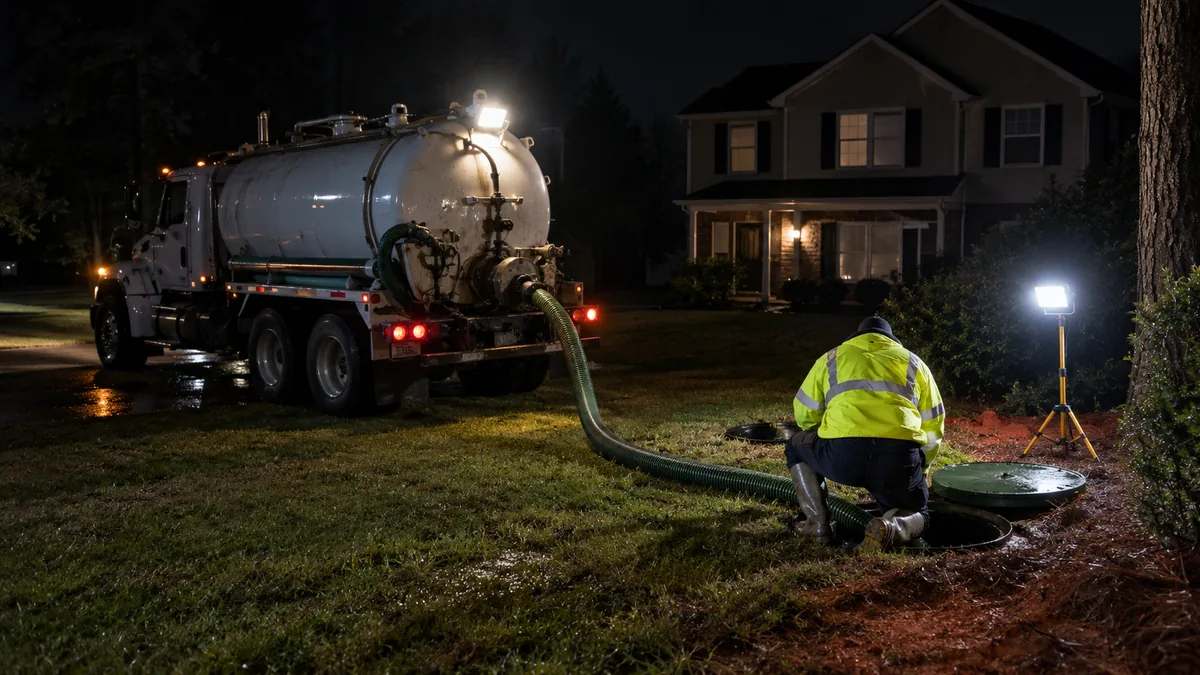
What happens on an emergency visit
The first thing the crew does is confirm the problem is on the septic side and not a clog inside the house. They open the cleanout between the house and the tank and check whether the line is full. If it is, the tank or its outlet is the bottleneck.
Next they uncover the lid. Most Gwinnett tanks sit 2 to 3 feet from the surface and at least 10 feet from the foundation, and a lot of homes built before risers were common still have lids under 12 to 18 inches of red clay. If you know where the lid is, or can pull your plat from the county’s online septic records, that saves time and digging cost.
Both compartments get pumped. Georgia rules require residential tanks to have two compartments, with the first holding at least two-thirds of the volume, and a crew that pumps only the first side leaves the problem half solved. With the tank empty, the crew checks the inlet and outlet baffles, pulls and cleans the outlet effluent filter, and watches the house line drain into the tank.
Why backups happen in Lawrenceville homes
The tank is simply overdue. Gwinnett County’s own homeowner kit estimates that a 1,000-gallon tank serving four people needs pumping about every 2.6 years. Plenty of houses in Collins Hill, Five Forks and along Alcovy Road have 1,000-gallon tanks and haven’t been pumped since the house was sold.
A clogged effluent filter. Newer tanks have an outlet filter that stops solids from reaching the drain field. When it clogs, the tank can back up into the house while it’s only half full of sludge. It’s one of the most common causes of emergency calls and one of the cheapest fixes.
The drain field is saturated. Lawrenceville gets roughly 45 to 55 inches of rain a year on soils with a dense red clay subsoil that moves water slowly. After a week of summer thunderstorms, the field can’t take more effluent, so the tank fills and backs up. UGA Extension notes that saturated soils simply cannot absorb effluent until they dry. Pumping buys time; the long-term fix may be drain field repair.
Roots or a broken baffle. Pines and water oaks send roots into outlet pipes, and concrete baffles in tanks from the 1980s and 1990s crack and drop into the tank. Either one blocks flow even when the tank level is normal. See septic tank repair for what those fixes involve.
What an emergency pump-out costs
A standard pump-out of a 1,000-gallon tank in the Lawrenceville area typically runs $280 to $520 during business hours, according to Homeyou’s June 2026 local cost data. After-hours and weekend calls commonly carry a premium of 50% to 100% on top of that. Digging to a buried lid adds roughly $50 to $150. Our full Lawrenceville pumping cost guide breaks this down by tank size, and the cost estimator gives you a number in about 30 seconds.
You’ll hear a price range on the phone before anything is dispatched. If the crew finds something that changes the price, such as a lid under a concrete patio, they stop and tell you before continuing.
Who is allowed to pump your tank
In Georgia, septic tanks must be pumped by a certified pumper working for a company that holds a county septage removal permit. That requirement comes from the Georgia Department of Public Health. It matters for your paperwork too: Gwinnett County gives a 10% stormwater fee credit for five years when you submit a dated pumping receipt from a licensed hauler. Keep the receipt from an emergency visit; it counts. The stormwater credit guide explains how to apply.
Paying for the visit
Payment is due when the work is done, by card, check or cash. The invoice lists the gallons pumped, the tank size, what the crew found and the date, which is the format lenders, home inspectors and the county all accept. If the backup damaged flooring or drywall, ask your insurer whether your policy includes a sewer and drain backup endorsement, and photograph everything before cleanup starts.
What's included
- Dispatcher triage call with an arrival window
- Price range stated before dispatch
- Tank located and opened (both compartments)
- Full pump-out of liquid, sludge and scum
- Inlet and outlet baffles checked
- Outlet effluent filter pulled and hosed off
- Backflow check at the house cleanout
- Written findings and what to do next
Sources
- EPA SepticSmart — How to care for your septic system
- UGA Extension — Recent rainfalls create septic problems for some homeowners
- Georgia DPH — How to become a certified installer or pumper
- Gwinnett County — Septic tanks
- Homeyou — Septic pumping costs in Lawrenceville, GA (June 2026)
- Septic & Well — Georgia septic pumping cost